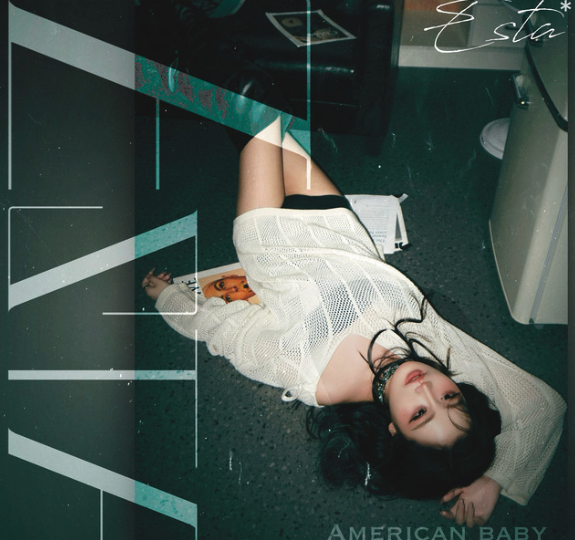
“American Baby,” the new single from Chinese singer-songwriter ESTA, arrives fully dressed for the dance floor: glossy synths, a sure-footed beat, and a chorus built to chant back. It is dance pop with a dreamy halo, and it lands best at the volume where the synths wash over you rather than hold up to a close listen. Its strengths are obvious and its limits are familiar, but the performance at the center of the record is anything but generic.
The track opens on a wash of keyboards, lets the texture build, then drops into a relaxed, steady groove. The arrangement favors shine over surprise — soft neon pads, unhurried momentum, space kept clear for the voice. ESTA rides the rhythm easily, sounding less like a singer fitting herself into a genre than someone who has been dancing to it all night. The mood matches the lyric: the kind of night where a song comes on, the talking stops, and the room moves.
That ease is the song’s signature. ESTA sings bright, confident, and loose, never reaching for a note she does not own. The control traces back to her teenage years studying opera and classical music, training that shows in the steadiness of her tone on a track that sounds effortless. She names Whitney Houston and Adam Lambert as influences, and the ambition connects: two singers who could fill a theater and still make a dance record feel personal. On “American Baby,” ESTA leans toward the intimate side of that equation, keeping the delivery conversational even when the chorus opens up. Her years writing English-language songs in Los Angeles — five or six of them — are audible too; the phrasing sounds settled rather than studied.
The lyric sketches a whirlwind romance in quick flashes: a sip of a drink, a turn on the dance floor, two people circling each other until their worlds collide. ESTA scales the attraction up to cosmic size — a supernova, a sea of glass, something supernatural — and the grand metaphors are the song’s least distinguished layer. Pretty but interchangeable, they borrow the star-and-galaxy language shared by dozens of pop tracks. The line that gives the song its heart is smaller and plainer: “the end of my solitude.” Beneath all the sparkle, someone did not expect to fall and is glad she did. The chorus works for the same reason most chant-like hooks do — “Exciting, fantastic, it’s dazzling, it’s magic” functions as a list of exclamations rather than a statement, and by the repeat it has done its job.
Set against that vocal, the production keeps a polite distance. Nothing here takes a rhythmic risk or offers a texture that surprises; the Hollywood sheen serves the hook and keeps the record radio-ready, which is plainly the intent. A later track that strips the arrangement back would test whether the voice can carry a sparser setting on its own. ESTA’s stated plan — bilingual songs in English and Chinese, a US home market with an Asian reach — also promises material that draws on more of her background than the current American-pop template allows.
“American Baby” reads as a deliberate opening move rather than a finished identity: a song with Hollywood shine, sung by someone who knows exactly where she wants to go next. As a calling card it succeeds. ESTA’s instrument is already the strongest thing on the record; the open question is what material she gives it once the introductions are over. The single is out now on all major streaming platforms.